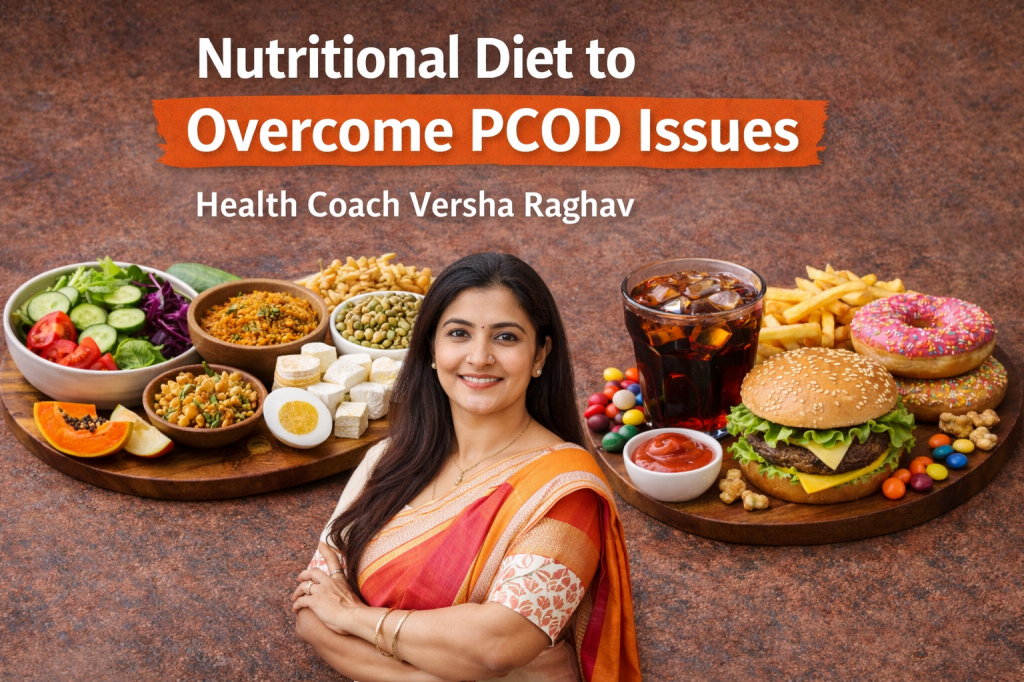
PCOD (Polycystic Ovarian Disease) is becoming very common among Indian women today. Irregular periods, weight gain, acne, hair fall, and mood swings are some of the symptoms many women face. The good news is that PCOD can be managed effectively with the right nutritional diet and lifestyle changes. Food plays a very important role in balancing hormones and improving overall health.
1. Focus on Low-GI Foods
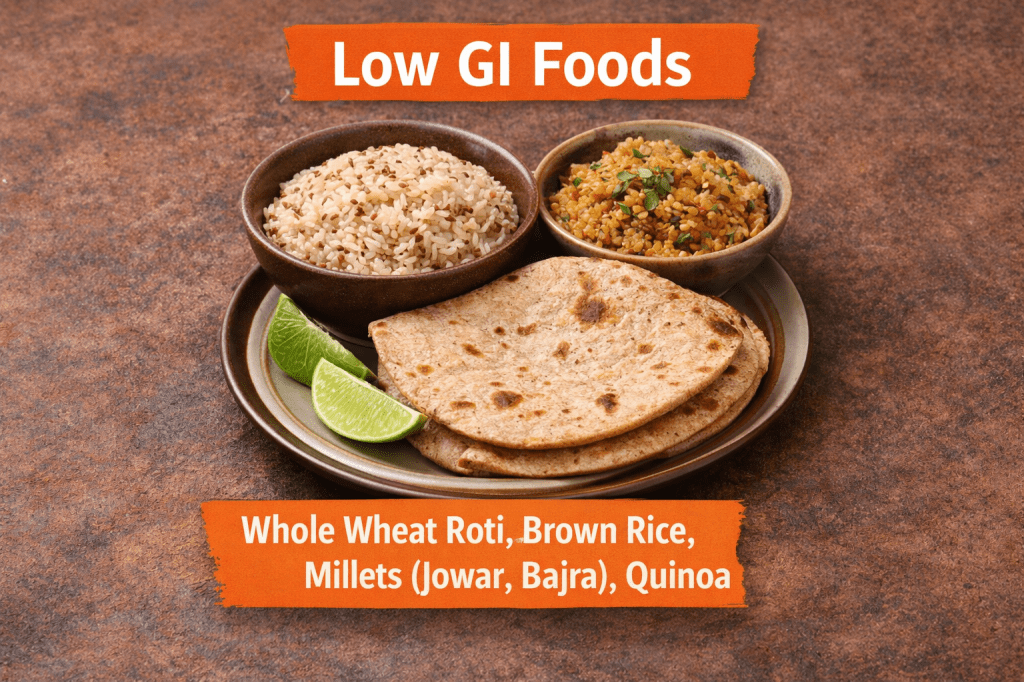
Low Glycemic Index (GI) foods help control blood sugar levels, which is very important in PCOD as insulin resistance is common.
Examples:
- Multigrain roti instead of Whole wheat roti
- Brown rice or millets like jowar and bajra
- Oats, quinoa, and barley
Key Points:
- Prevents sudden sugar spikes
- Helps in weight management
- Improves hormonal balance
2. Include Good Quality Protein
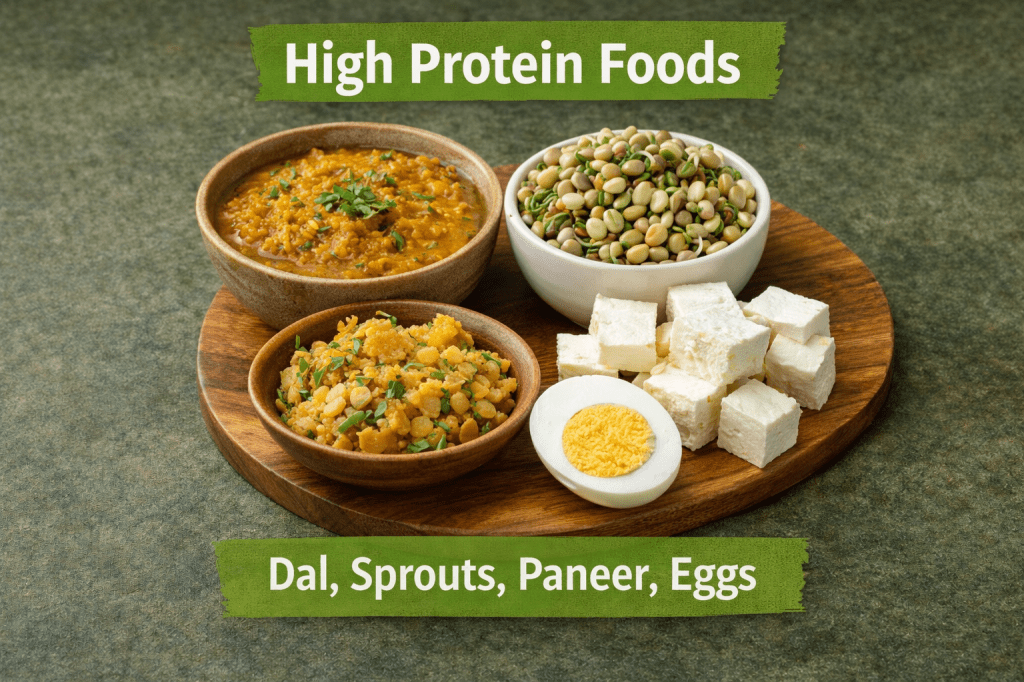
Protein keeps you full for longer and helps reduce sugar cravings.
Examples:
- Dal, chana, rajma, and sprouts
- Paneer, curd, and tofu
- Eggs and fish (if non-vegetarian)
Key Points:
- Reduces hunger and overeating
- Supports muscle health
- Improves metabolism
3. Eat Healthy Fats
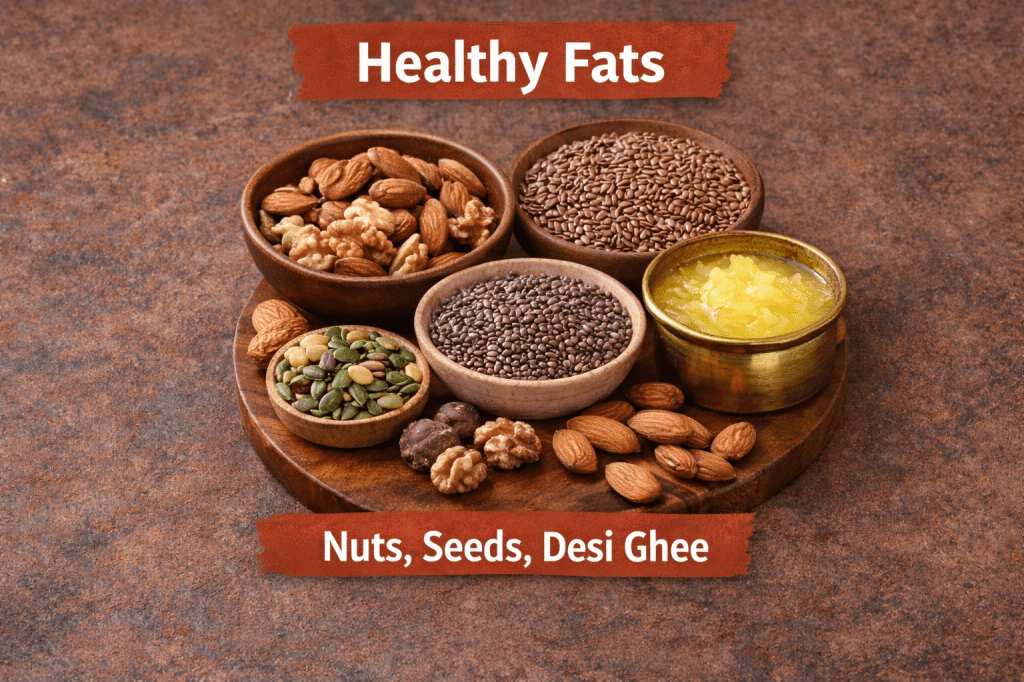
Many women think fats should be avoided, but healthy fats are essential for hormone production.
Examples:
- Nuts like almonds and walnuts
- Seeds like flaxseed, pumpkin seeds, and chia seeds
- Desi ghee in limited quantity
Key Points:
- Helps balance hormones
- Reduces inflammation
- Improves skin and hair health
4. Load Your Plate with Fibre
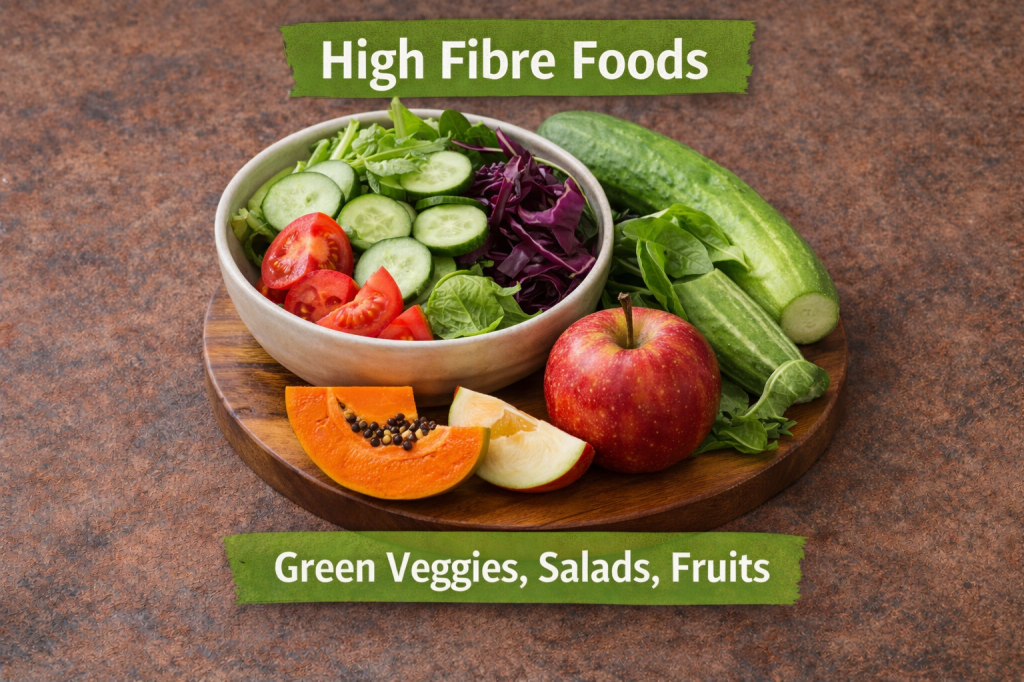
Fibre helps in digestion and removes excess hormones from the body.
Examples:
- Green vegetables like spinach, lauki, tori
- Salads with cucumber, carrot, beetroot
- Fruits like apple, pear, papaya (in moderation)
Key Points:
- Improves gut health
- Helps regular periods
- Keeps you full for longer
5. Cut Down on Sugar and Junk Food

Excess sugar and processed food worsen PCOD symptoms.
Avoid:
- Bakery items, chips, soft drinks
- Excess tea, coffee, and sweets
Key Points:
- Reduces insulin resistance
- Helps control weight
- Improves energy levels
6. Stay Hydrated and Follow a Routine
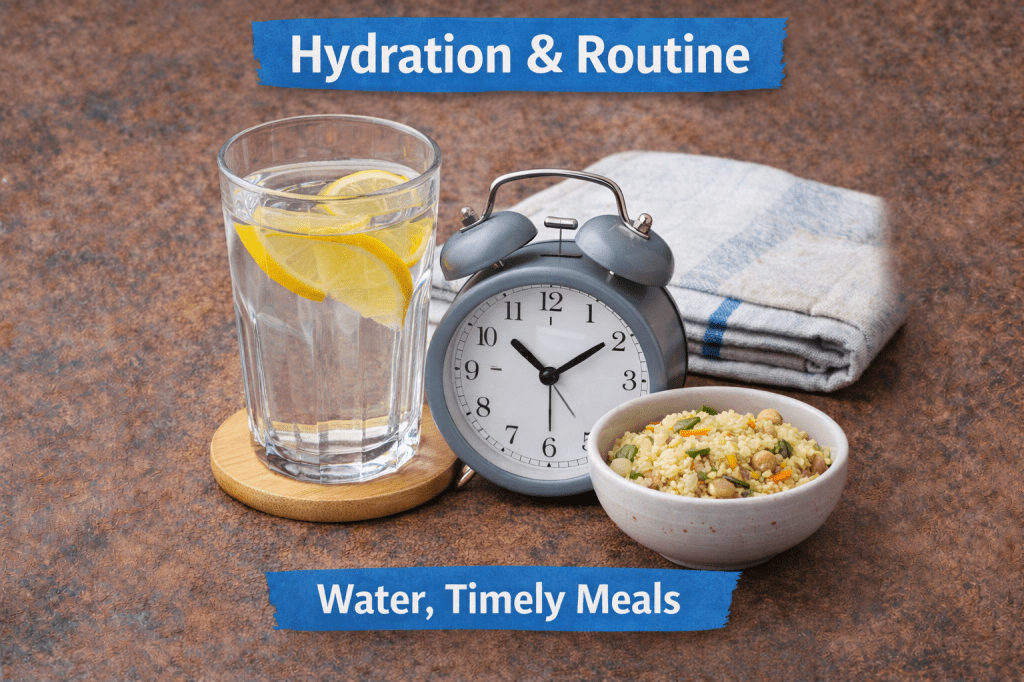
Drink enough water and eat meals on time.
Example:
- Start your day with warm water
- Eat every 3–4 hours
Key Points:
- Flushes toxins
- Improves digestion
- Supports hormonal health
Final Thought
PCOD is not a disease but a lifestyle disorder. With the right nutritional diet, regular exercise, and stress management, it is completely manageable. Small, consistent changes in daily food habits can bring big improvements. Start today, eat smart, and take charge of your health.
— Health Coach Versha Raghav
 Health Coach Versha Raghav
Leave a comment